
Walk into any Indian supermarket today and you’ll see protein everywhere: protein atta, protein bars, protein lassi, even protein chips. India’s protein market, and plant protein in particular, has grown rapidly, and one of the biggest shifts is that protein is moving out of the gym bag and onto the family kitchen shelf.
Leading that shift is plant protein. Here’s why, and how to make it work for your household.
India’s Protein Gap
Surveys have repeatedly found that a large share of Indians don’t get enough protein. Our meals are often built around rice, roti and sabzi, with a small bowl of dal. That dal matters, but it usually isn’t enough to meet the recommended 0.8–1 g of protein per kg of body weight, let alone the higher amount (see our protein guide for the Indian diet) active people, older adults and those trying to lose weight benefit from.
For vegetarian families, closing that gap with food alone can mean eating large portions of paneer, dal and curd every day. That’s where a quality protein powder can help as a convenient top-up.
Why Plant Protein Is Catching On
- It fits vegetarian and vegan diets. No dairy, no animal source.
- It’s gentler for many stomachs. A lot of Indians are lactose intolerant to some degree. Pea protein is naturally lactose-free.
- It feels like “food”, not a gym supplement. Parents, working professionals and older family members are more comfortable adding it to daily meals.
- Sustainability. Plant proteins generally have a lighter environmental footprint.
Pea Protein vs Whey: An Honest Comparison
| Pea Protein Isolate | Whey Protein | |
|---|---|---|
| Source | Yellow peas | Milk |
| Lactose | Lactose-free | Contains some (concentrate) |
| Amino acid profile | Good; rich in arginine and BCAAs, a little lower in methionine | Complete; very high in leucine |
| Digestion speed | Moderate | Fast |
| Best for | Vegetarians, vegans, dairy-sensitive people, daily family nutrition | Post-workout recovery, people who tolerate dairy well |
The truth? Both are excellent. The “best” protein is the one you’ll actually use every day and digest comfortably. Pairing pea protein with grains through the day (think roti, rice, oats) also helps round out its amino acid profile.
7 Desi Ways to Use Plant Protein
- Morning smoothie: Banana, a handful of oats, a scoop of chocolate pea protein and water or almond milk.
- Protein chilla: Mix half a scoop of unflavoured protein into your besan chilla batter.
- Cold coffee: Blend chocolate pea protein with chilled coffee and ice for an evening pick-me-up.
- Overnight oats: Oats, chia seeds, protein powder, and fruit, prepped the night before.
- Protein laddoo: Combine dates, nuts, oats and protein powder, then roll into bite-sized laddoos.
- Kids’ milkshake (for teens, check portion): A small scoop blended into a chocolate shake.
- Post-walk drink for parents: A simple shake after the evening walk supports muscle as we age.
Tip: Don’t add protein powder to very hot liquids, as it can clump. Mix it in once the dish has cooled slightly.
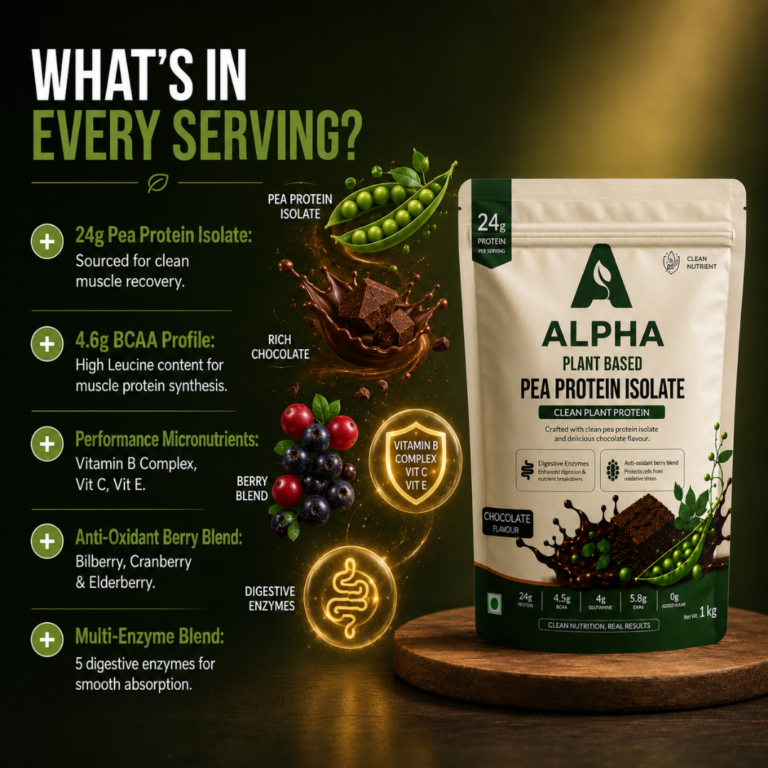
What to Look For in a Plant Protein
- At least 20–25 g of protein per serving
- A clear ingredient list with no hidden fillers
- Isolate rather than concentrate for higher protein per scoop
- A taste your family will actually enjoy
Alpha Advanced Plant Pea Protein Isolate is made for exactly this kind of everyday use, with a chocolate flavour that works in shakes, cold coffee and laddoos. Pair it with creatine if you strength-train. Prefer dairy? Alpha Whey Protein Concentrate delivers 27 g of protein per serving along with Shilajit, Ashwagandha and Ginseng. For the whole family, check out the Alpha Plant Wellness Combo.
An Ayurvedic Note
Ayurveda has always valued legumes like mung and masoor as sources of strength (bala). Peas belong to the same family. From an Ayurvedic point of view, digest your protein well: have it with warm spices like ginger or cinnamon, and avoid very large, cold shakes late at night when agni (digestive fire) is weaker.
Related Reading
- Protein Intake for the Indian Diet: What You Need to Know
- Creatine for Women in India: What the Science Says
- Festive Glow From Within: 30-Day Pre-Diwali Skin Plan
- Whey Protein + Ayurvedic Adaptogens: The Ultimate Muscle Recovery Stack
The Bottom Line
Protein isn’t just for bodybuilders anymore. It’s for students, working parents, grandparents and everyone in between. Plant protein makes it easy for vegetarian and dairy-sensitive households to close the protein gap without changing the food they love.
Disclaimer: This article is for general information only and is not medical advice. People with kidney conditions, pregnant women and children should consult a doctor or nutritionist before using protein supplements.