
Sharad Navratri 2026 begins on Sunday, 11 October and ends with Dussehra on 20 October. For millions of Indians, these nine days mean devotion, garba nights and Navratri fasting (a vrat), often with only one proper meal a day built around sabudana, aloo and fried snacks.
The problem? Most traditional vrat food is high in carbohydrates and low in protein. After a few days, many people notice tiredness, headaches, low energy at the gym, and muscle soreness that takes longer to go away. The good news is that with a little planning, you can honour the fast and look after your body.
Why Protein Drops During Navratri
A typical vrat plate of sabudana khichdi, aloo sabzi and kuttu puris is filling, but it contains very little protein. Sabudana is almost pure starch. If you are also skipping dal, eggs or regular grains, your daily protein can fall well below the roughly 0.8–1 g per kg of body weight most adults need, and far below what active people need. (Read more in our guide to protein intake for the Indian diet.)
Low protein over nine days, combined with late nights and dancing, can leave you feeling weak and can slow muscle recovery.
Vrat-Friendly Protein Sources
Most fasting traditions allow dairy, nuts, seeds and certain flours. Good options include:
- Paneer – about 18 g protein per 100 g. Try paneer tikka made with sendha namak.
- Dahi and Greek-style curd – great with fruit or as a raita with lauki or kheera.
- Milk and makhana – roasted makhana with a glass of milk is a classic vrat snack.
- Rajgira (amaranth) and kuttu (buckwheat) – both carry more protein than sabudana. Rajgira is one of the better plant proteins among fasting grains.
- Peanuts, almonds, walnuts – add them to khichdi or eat a handful between meals.
- Seeds – pumpkin, melon (magaz) and chia seeds, where your tradition allows them.
Customs vary from family to family and region to region. Always follow what your own tradition permits.
A Simple 1-Day Navratri Meal Plan
| Time | What to eat |
|---|---|
| Morning | Warm water, then a glass of milk with 5–6 soaked almonds |
| Mid-morning | Seasonal fruit with a bowl of dahi |
| Lunch | Rajgira or kuttu roti, paneer or lauki sabzi, cucumber raita |
| Evening | Roasted makhana and peanuts, coconut water |
| Dinner | Sabudana khichdi loaded with peanuts and a side of paneer |
Can You Have a Protein Shake During the Fast?
This is one of the most searched questions every Navratri. Whey protein is made from milk, so many people who already consume dairy during their vrat include it. Others prefer to avoid anything processed while fasting. It is a personal and religious choice, so check with your family’s practice.
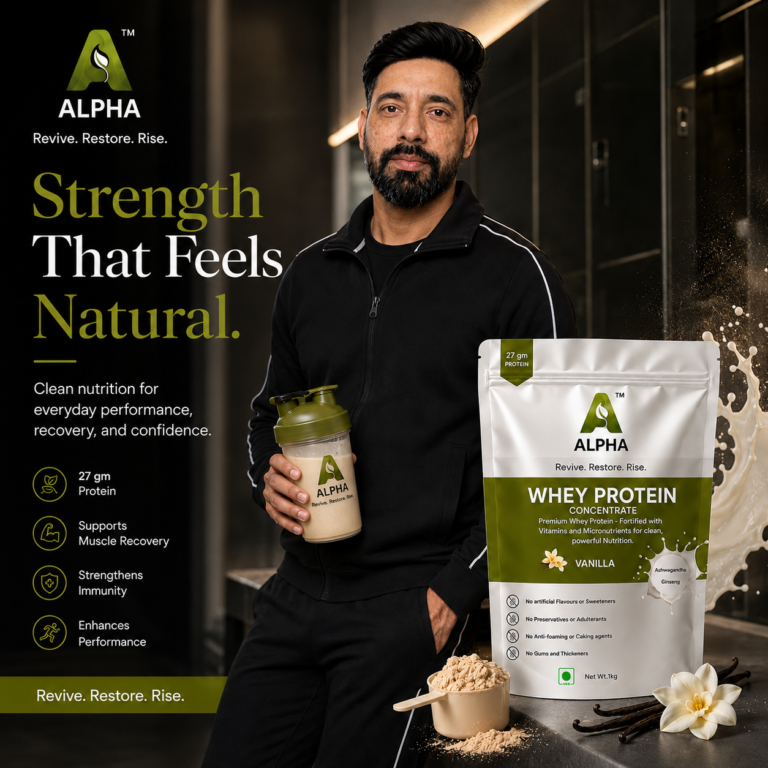
If you do include it, a shake made with Alpha Whey Protein Concentrate (27 g protein per serving) blended with milk and a banana is an easy way to close the protein gap on busy festival days. For those who avoid dairy, a plant-based option like Alpha Advanced Plant Pea Protein Isolate is an alternative, though again, follow your own vrat rules.
Ayurvedic Tips for a Comfortable Fast
Ayurveda sees Sharad Navratri, the change from monsoon to autumn, as a natural time to rest the digestive fire (agni). A few classical suggestions:
- Eat light and warm. Warm, freshly cooked meals are easier to digest than heavy fried food.
- Go easy on fried snacks. Too many pakoras and puris can leave you feeling heavy and sluggish.
- Stay hydrated. Coconut water, buttermilk (chaas) and lemon water with sendha namak help replace minerals lost while dancing at garba.
- Spice smartly. Jeera, black pepper and ginger support digestion and are allowed in most vrat kitchens.
- Rest well. Late-night garba plus early puja can cut sleep short. Try to protect at least 7 hours.
Training During Navratri
You don’t have to stop exercising, but adjust your intensity. Swap heavy lifting days for lighter sessions, walking or yoga, especially if you are eating only one or two meals. Time your workouts shortly after a meal rather than on an empty stomach, and keep your post-workout snack protein-rich: paneer, dahi or a shake if you include one.
Many people also lean on traditional Ayurvedic rasayanas for stamina during this season. Shilajit, used in Ayurveda for centuries, is often taken with warm milk. If it fits your practice, Alpha Himalayan Shuddh Shilajit Resin can be part of your routine.
Breaking the Fast on Dussehra
After nine days of light eating, don’t jump straight into a heavy festive feast. Start with moong dal khichdi or a simple dal-rice meal, then gradually return to your normal diet over a day or two. Your digestion will thank you.
Related Reading
- Protein Intake for the Indian Diet: What You Need to Know
- The Ayurvedic Morning Routine: A Guide to Starting Your Day Right
- Shilajit vs Ashwagandha: Which Ayurvedic Supplement is Right for You?
The Bottom Line
Navratri is about discipline and devotion, not about feeling drained. By choosing protein-rich vrat foods like paneer, dahi, rajgira and nuts, staying hydrated and listening to your body, you can enjoy all nine days with steady energy.
Shubh Navratri from all of us at Alpha Indic!
Disclaimer: This article is for general information only and is not medical advice. If you are pregnant, diabetic, on medication or have a health condition, speak to your doctor before fasting or starting any supplement.